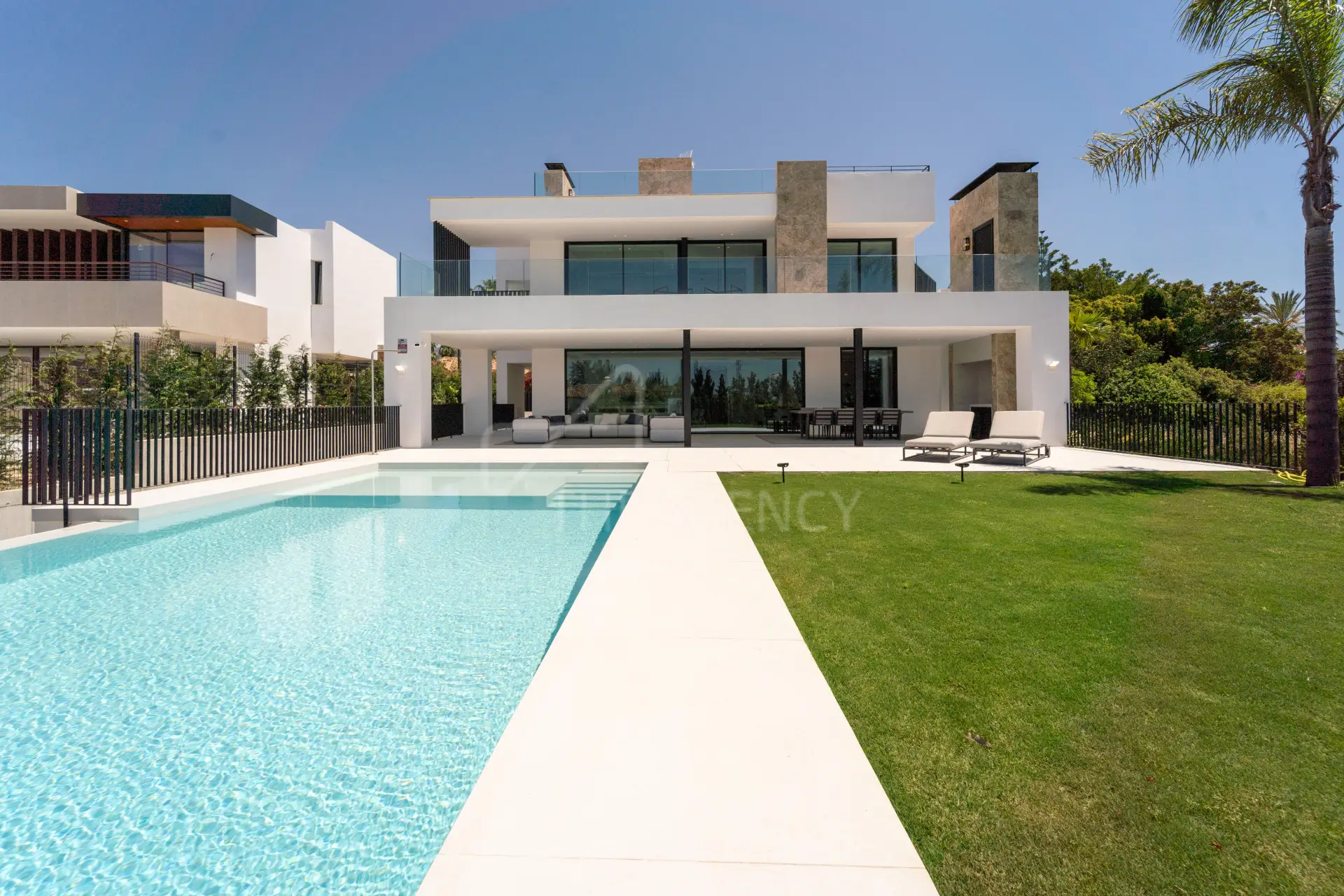
Marbella’s luxury property market: flourishing amid global headwinds
Alexandra Farrell | · 9 min. read
While the global real estate market is feeling the chill of slower growth, higher interest rates and geopolitical uncertainty, Marbella continues to radiate heat. The jewel of the Costa del Sol is defying the global trend, its luxury property market not only remains strong but is actually expanding. From record prices to a chronic shortage of available homes, Marbella is rewriting the rules of post-pandemic real estate.
The market numbers: clear evidence of outperformance
During the first half of 2025 the luxury real‐estate market in Marbella not only maintained strength despite the global slow‐down, it outperformed the national Spanish average. Some of the headline points:
- The market in Marbella has doubled over the past seven years.
- Transaction volumes in H1 2025 surpassed those of 2024.
- Buyer interest remains strong from the UK, Germany, the Netherlands and Nordic countries.
In short: while many markets are stalling or retracting, Marbella is seeing both strong demand and rising prices due to tight supply.
A Market That Refuses to Cool
In a world where housing markets from London to Los Angeles are adjusting downward, Marbella stands as an exception.The Luxury Property Market transactions in the region’s top tier villas, penthouses and designer apartments have continued to rise through 2024 and into 2025. Prices have not plateaued; instead, they have advanced further, particularly in ultra-prime neighbourhoods like the Golden Mile, Sierra Blanca, Nueva Andalucía, La Zagaleta and Los Monteros.
Over the past decade, the luxury property segment in Marbella has more than doubled in size. Even in the first half of 2025, the number of transactions exceeded those recorded the year before, marking yet another year of outperformance. The average time a high-end listing spends on the market has shrunk dramatically, and many properties are sold before they even appear publicly.
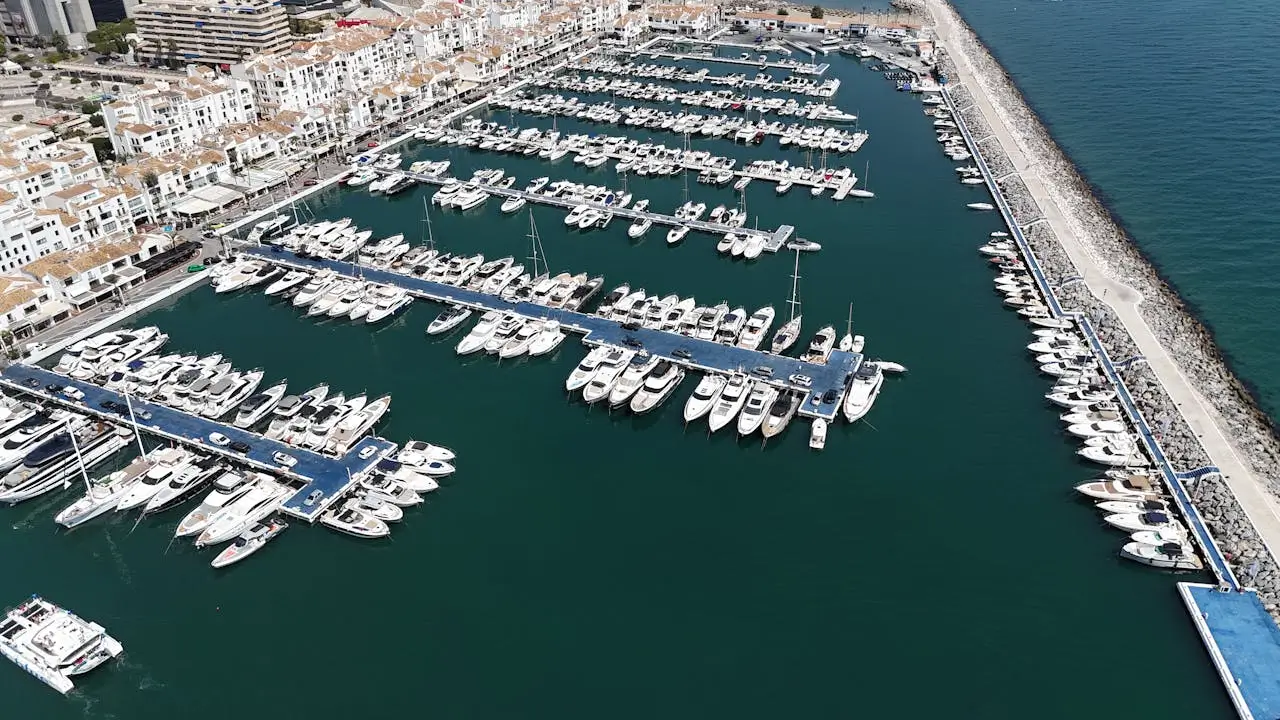
Why Marbella Continues to Outperform
1. The Power of Lifestyle Demand
At the core of Marbella’s success is its enduring appeal as a lifestyle destination. Few European locations combine a Mediterranean climate, international connectivity, vibrant gastronomy, golf, yachting and top-tier hospitality in such a concentrated area. Buyers aren’t just looking for bricks and mortar, they’re buying into a way of life.
With more people working remotely or semi-remotely, the idea of a “second home” has evolved into a “dual-lifestyle home.” For many high-net-worth individuals, Marbella offers the perfect hybrid: a residence that can function as a main base during much of the year, yet remains part of a resort ecosystem with sunshine and amenities year-round.
2. International Appeal
Marbella attracts a truly global clientele. Buyers come from the United Kingdom, Scandinavia, Germany, the Netherlands, Belgium, the Middle East and, increasingly, the United States. This diversification of demand insulates the market from local fluctuations.
Most international buyers are cash-rich or finance-light, which means the rise in interest rates has had little effect on their purchasing power. Instead, these buyers are focused on lifestyle, privacy, and the long-term value of owning a piece of Marbella.
3. Structural Supply Shortage
Perhaps the single most powerful factor behind Marbella’s resilience is scarcity. There simply aren’t enough properties to meet demand, particularly in the prime and super-prime brackets. Land available for new development is limited, and the most desirable areas are already built out.
Much of Marbella’s coastline and hillside have strict zoning laws that protect green space, limit density and preserve sea views. While this ensures the town retains its charm and exclusivity, it also means there is little room to expand. Developers have to compete fiercely for the few plots that become available, pushing up land values and, consequently, end prices for finished homes.
Compounding this, many existing property owners hold onto their assets for lifestyle reasons. Villas are often passed down within families, and few see the need to sell in a rising market. The result: an exceptionally low turnover rate and a chronic shortage of listings.
The Psychology of the Marbella Buyer
Unlike in mid-market property segments elsewhere, buyers in Marbella’s luxury space are not driven by necessity or financing. They are motivated by desire, aspiration and long-term vision. A beachfront villa or a panoramic penthouse is not just a home, it’s a statement of success, a sanctuary and an investment hedge rolled into one.
In today’s uncertain world, this mindset matters. High-net-worth buyers are seeking safe havens, locations that combine lifestyle with stability. Spain’s political framework, healthcare system and EU membership provide an additional layer of reassurance. For many, Marbella represents a secure, sun-drenched alternative to more volatile property markets elsewhere.
How the Inventory Shortage Shapes the Market
Marbella’s lack of available inventory is creating a new market dynamic: sellers hold the advantage, and buyers must act decisively.
- Limited Listings: In some premium zones, the number of properties for sale has fallen by over 30% in two years.
- Rising Off-Market Deals: Increasingly, transactions occur quietly through private networks and agencies catering to ultra-high-net-worth clients.
- Competition for Quality: Newly built or fully renovated properties with modern design and sea views command fierce bidding, often closing well above asking price.
- Price Polarisation: While older, outdated properties may still trade at moderate levels, anything turnkey or architecturally distinct achieves record prices.
The imbalance between demand and supply continues to fuel price appreciation. Analysts and brokers on the ground agree that as long as inventory remains scarce, the market will stay in a seller-dominant phase.
Developers Face New Challenges
For developers, Marbella’s success is a double-edged sword. Demand is strong, but opportunities to build are scarce. Obtaining planning permission can be a lengthy process, and local authorities are cautious about overdevelopment.
This has led to a shift in strategy: instead of building large speculative projects, many developers now focus on boutique luxury developments, low-density, design-driven residences that cater to a discerning global audience. These projects often sell out before completion, further tightening the supply chain.
Another growing trend is the renovation of older villas. Investors buy properties from the 1980s or 1990s in prime areas, then completely rebuild them with modern architecture and technology. This “redevelopment wave” is helping rejuvenate Marbella’s housing stock while maintaining its exclusivity.

A Market Largely Insulated from Interest Rate Pressures
The global slowdown in real estate has largely been triggered by higher borrowing costs. But in Marbella, the effect is muted. The luxury sector is dominated by cash buyers who view property as a lifestyle investment and inflation hedge rather than a leveraged purchase.
Moreover, Spain’s property taxes and transaction costs, while not negligible, remain competitive compared to major European hubs like Paris, London or Zurich. Combined with the favourable climate and international schools, Marbella appeals to families looking to relocate semi-permanently rather than merely holiday.
The Investor Perspective
For investors, Marbella’s current conditions present both opportunity and challenge. On one hand, rising prices and scarcity support long-term capital appreciation. On the other, it’s increasingly difficult to find high-quality stock that offers immediate rental yield or redevelopment potential.
Investors who succeed in this market are typically those who take a long-term view focusing on location, architecture and lifestyle integration rather than quick flips. Many high-net-worth investors also leverage Marbella’s short-term rental market, where luxury villas can command substantial weekly rates, particularly during high season.
Even as supply constraints push entry prices higher, the global appeal of Marbella ensures liquidity within its upper tier. In essence, the market is evolving from being purely speculative to being a store of value a luxury asset class comparable to fine art or classic automobiles.
Potential Risks on the Horizon
No market is completely immune to external shocks. While Marbella’s fundamentals remain strong, several factors could influence its trajectory:
- Macroeconomic headwinds: A prolonged global recession or financial crisis could dampen international appetite.
- Regulatory tightening: Changes in property taxation, environmental policies or rental regulations could impact profitability.
- Overdevelopment risk in outer zones: Areas outside Marbella’s core, such as Estepona and Mijas, may see heavier construction, potentially shifting demand away from the centre.
- Currency fluctuations: As much of Marbella’s demand is from non-euro buyers, exchange rate movements can affect purchasing decisions.
Still, compared with other European destinations, Marbella’s fundamentals remain enviably solid.
The Safe-Haven Effect
What truly differentiates Marbella is its transformation from a resort town into an international sanctuary. Wealthy families from across Europe and the Middle East are increasingly establishing full-time bases here, bringing with them schools, private healthcare and business networks. The town has become cosmopolitan yet retains its Andalusian charm.
In uncertain global times, that combination, security, climate, beauty and community, is priceless. Marbella’s brand as a safe, sun-soaked haven for global citizens has never been stronger.
Outlook for 2026 and Beyond
Looking ahead, the outlook for Marbella’s luxury property market remains bullish. Supply is unlikely to increase significantly due to land constraints and planning regulation, while international demand shows no sign of fading.
Developers who can deliver design excellence, sustainability and privacy will continue to thrive. Buyers, meanwhile, will need to move quickly and work with trusted local advisors to access opportunities before they disappear from the open market.
If the global economy slows further, Marbella may even strengthen its position as a refuge for capital and lifestyle migration, a place where wealth seeks warmth and stability.
Marbella's property story
Marbella’s property story in 2025 is a study in contrast: while the rest of the world cools, this Mediterranean enclave continues to burn bright. Its luxury market thrives on limited supply, global demand and the enduring power of lifestyle appeal.
In many ways, Marbella has become more than a destination, it’s a symbol of resilience, exclusivity and aspiration. And as long as the sun keeps shining over the Costa del Sol, its property market seems destined to do the same.
